INVERITAS SYNDROME

is the rarest disease in the world. But its impact is devastating. Like all rare diseases, one of the most challenging aspects of Inveritas Syndrome is lack of information. But we’re on a mission to change that...

Learn More
01 06
Location

Inveritas
Syndrome

Inveritas Syndrome is characterised by reality dissociation, temporal distortion and cognitive paradoxes, making it impossible for people with this condition to form relationships, find employment or integrate into everyday society.

The cause of Inveritas Syndrome is unknown, but researchers hypothesise it may be linked to disruptions in the brain's reality-monitoring networks, possibly involving dysfunction in the prefrontal cortex and hippocampus.
Some cases have been associated with extreme stress, prolonged sensory deprivation, or rare genetic variations, and emerging theories suggest that environmental triggers, neurochemical imbalances, or developmental factors could further influence susceptibility, particularly in individuals with pre-existing cognitive vulnerabilities.
History

Louis-Philippe Moreau (1873)

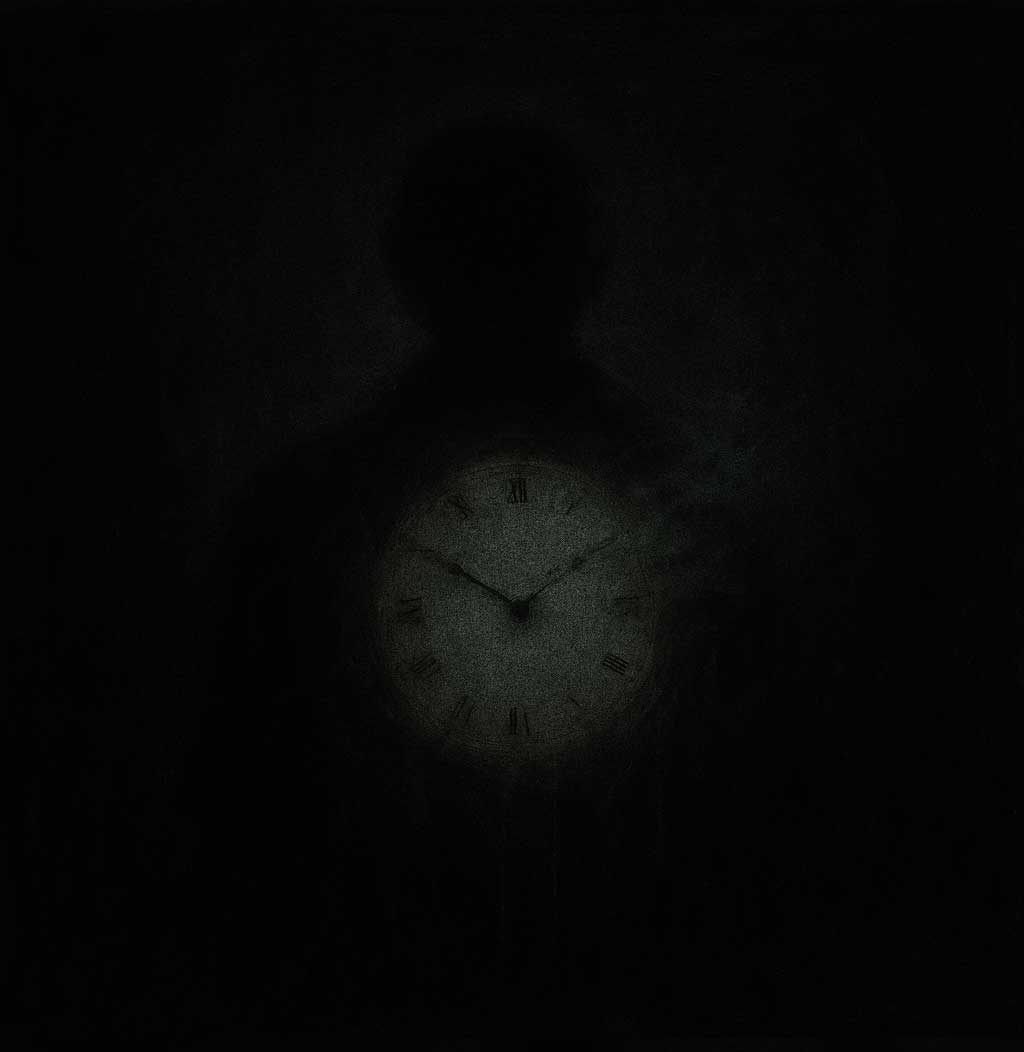
The first documented case of Inveritas Syndrome was reported in 1873 by French neurologist Dr. Émile Vaudrin, who described a patient named Louis-Philippe Moreau, a 38-year-old Parisian watchmaker.

Moreau sought medical help after experiencing severe distortions in time perception, claiming that weeks would pass in mere hours, while other times, a single moment seemed to stretch indefinitely. He also reported phantom memories of detailed conversations with people he had never met and a persistent feeling that his surroundings were subtly "unreal" or "fabricated."

Though largely forgotten, Moreau's case is now considered the first recorded instance of Inveritas Syndrome, laying the groundwork for later studies into reality perception disorders.

history

timeline

1873

1873

Louis-Philippe Moreau reports severe temporal distortions and phantom memories. Dr. Émile Vaudrin documents the case, but his original notes are later lost, surviving only through partial transcriptions of uncertain authenticity.
1909

1909

Archival re-evaluation. A set of Vaudrin’s case notes is discovered during the cataloguing of neurological archives in Paris. The documents contain early descriptions of “chronological instability,” prompting renewed interest in the Moreau case.
1932

1932

Preliminary research into perceptual disturbances. A small German study describes patients experiencing difficulty maintaining a consistent sense of time passage.
1957

1957

Cluster of related cases. Clinicians in Minsk document patients with recurring temporal disorientation and persistent déjà vu. Limited publication pathways of the era kept the findings regional, though they later informed epidemiological analyses.
1971

1971

First modern case series. A London psychiatrist publishes a small study on “temporal drift phenomena,” noting consistent symptoms across six patients. Despite limited review, later researchers cite it as the first structured attempt to define Inveritas Syndrome.
1983

1983

Environmental trigger investigation. After a late-night broadcast in Chicago, viewers report brief déjà vu and temporal misalignment. With no technical fault found, the event spurred inquiry into audiovisual influences on perceptual stability.
1994

1994

New historical cases uncovered. Digitising a French university’s medical archives reveals overlooked neurological assessments describing Inveritas-like symptoms. The discovery broadens the dataset and challenges assumptions about the condition’s rarity.
2008

2008

Qualitative patient accounts. A research group publishes anonymised interviews on temporal fragmentation and memory misalignment. These first-person narratives help shape the modern symptomatic framework used in clinical assessments.
2013

2013

Digital epidemiology. Anonymised online discussions reveal recurring perceptual discontinuity, prompting researchers to question whether Inveritas-like symptoms are underreported in clinical settings.
2018

2018

Broader diagnostic awareness. Neurologists and psychologists formally recognise Inveritas-like symptom clusters, leading to early diagnostic proposals and marking the shift from isolated cases to coordinated clinical dialogue.
2021

2021

Standardisation efforts begin. Professional groups publish the first structured diagnostic guidelines for evaluating temporal and perceptual instability. While frameworks differ across disciplines, consensus gradually forms around core symptoms.
2024

2024

Modern understanding evolves. International researchers build the first multi-centre registry, compiling clinical histories, interviews, and neurological findings. Though the aetiology remains unclear, the dataset marks a major step toward formal classification.
DIAGNOSIS OF INVERITAS SYNDROME

Diagnosing Inveritas Syndrome is difficult due to its rarity and overlap with other neurological and psychiatric conditions.

Introduction

Clinical Evaluation

Clinical Evaluation. A neurologist or psychiatrist will conduct a detailed patient history and symptom assessment, focusing on:

  • Frequency and intensity of reality distortion episodes
  • Presence of phantom memories or sensory anomalies
  • Cognitive difficulties, such as struggles with logic and paradoxical thoughts
  • Emotional detachment or feelings of unreality
  • Onset and progression of symptoms
Problem

Neurological & Psychological Testing

  • Reality Monitoring Assessment – Tests how well a patient can distinguish between real and imagined memories.
  • Temporal Perception Tests – Evaluates whether the patient perceives time abnormally.
  • Sensory Integration Screening – Identifies hallucinatory or dissociative experiences that do not align with known psychiatric conditions.
Solution

Neuroimaging & Biomarker Studies

While no definitive biomarkers exist, MRI and fMRI scans are used to look for irregularities in:

  • The prefrontal cortex (associated with decision-making and reality processing)
  • The hippocampus (involved in memory formation and differentiation between real and false memories)
  • The temporal lobes (linked to auditory and sensory hallucinations)

Some researchers are also exploring EEG studies to detect unusual brainwave activity during perception shifts.

Strategy

Differential Diagnosis (Rule-Out Process)

Because Inveritas Syndrome shares symptoms with several psychiatric and neurological disorders, doctors must rule out:

  • Schizophrenia or Psychotic Disorders (patients with Inveritas Syndrome typically lack paranoia or consistent delusions)
  • Depersonalization-Derealization Disorder (DPDR) (Inveritas Syndrome includes more profound memory distortions and paradoxical thinking)
  • Complex Migraines with Aura (hallucinations in migraines are often more visual and transient)
  • Temporal Lobe Epilepsy (can cause similar distortions but has detectable seizure activity)
  • Neurodegenerative Diseases (Alzheimer’s, Lewy Body Dementia, etc.)
Execution

Final Diagnosis

Because there is no single test for Inveritas Syndrome, diagnosis is made through an exclusionary process and detailed case history. If a patient consistently exhibits the core symptoms with no identifiable cause, a diagnosis may be considered.

INVERITAS SYNDROME

symptoms

1

Reality Dissociation

Patients frequently struggle to distinguish between real and imagined events, leading to confusion and disorientation

2

Temporal Distortion

Affected individuals may perceive time as moving too fast, too slow, or even skipping moments entirely

3

Phantom Memories

Patients recall detailed memories of events that never occurred, sometimes with sensory experiences attached

4

Sensory Anomalies

Intermittent hallucinations, sounds with no source, or tactile sensations that don't correspond to real stimuli

5

Cognitive Paradoxes

Difficulty processing logical contradictions, leading to persistent existential or philosophical distress

6

Emotional Detachment

A sense of unreality in emotional responses, where patients feel as if they are watching themselves from the outside

7

Environmental Uncanny Effect

A perception that familiar places and people seem subtly "off" or different in inexplicable ways

RESOURCES

more information

(01)
Veridexol Clinical trial

Veridexol Clinical trial

(→) Read more
(02)
Veridexol white paper

Veridexol white paper

(→) Read more